


Anchors
Our advantage
Company strength
The factory covers an area of more than 20,000 square meters and has more than 300 employees. Our company has a registered capital of 10 million yuan and has passed the national quality management system certification.
Professional Team
The company has a professional team that is constantly committed to technological innovation and management innovation, and continues to provide high-quality products and services to the yacht industry.
Certificates
ISO9001. ISO 14001, ISO 45001
Accept ODM/OEM service
Besides the standard products, Xinkun Marine also provide the OEM and ODM service to our customers. If customers want custom Anchors and custom boat seats, we can make the toolings and produce the products as per the customers' requirements.
What is Anchors
An anchor is a tool used to secure a ship when it is moored so that it cannot float away. Generally, the main anchors are set on both sides of the bow, while the auxiliary anchors are set at the stern. Ancient anchors were often just a stone, a bag of stones, and sand. Later, the shape of the anchor evolved into a triangle. The anchor is the spiritual symbol of the navy. The anchor pattern can be seen on the warship flags of most countries. In some ports or naval schools and maritime schools, anchors of retired ships are often placed on land for commemoration and display purposes.
-
![Folding Grapnel Anchor]() Folding Grapnel AnchorFolding grapnel anchor is made of 316 stainless steel and is foldable.read more
Folding Grapnel AnchorFolding grapnel anchor is made of 316 stainless steel and is foldable.read more -
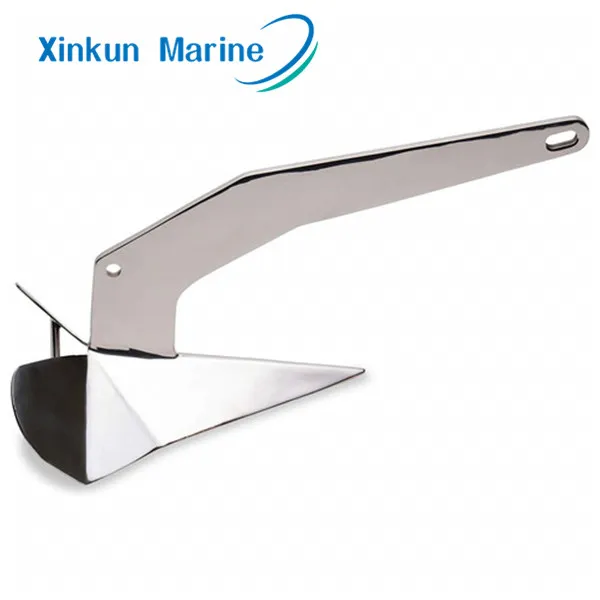
![Delta Style Anchor]() Delta Style AnchorAISI 316 stainless steel delta anchor, highly polished anchor for boats.read more
Delta Style AnchorAISI 316 stainless steel delta anchor, highly polished anchor for boats.read more -
![Stainless Steel Danforth Anchor]() Stainless Steel Danforth AnchorStainless steel danforth anchor, made of 316 stainless steel and surface mirror polished, is one kind of the danforth anchor. It performs very well in mud or sand seabeds and can stow very easily...read more
Stainless Steel Danforth AnchorStainless steel danforth anchor, made of 316 stainless steel and surface mirror polished, is one kind of the danforth anchor. It performs very well in mud or sand seabeds and can stow very easily...read more


Improved Stability
A sea anchor helps to stabilize the vessel by reducing its lateral movement, especially in adverse weather conditions like strong winds and rough seas. This can enhance the safety and comfort of the crew and prevent excessive rolling and pitching.
Reduced Drift
Deploying a sea anchor can reduce the rate of drift, keeping the vessel in a more predictable position. This is particularly useful when waiting for favorable weather conditions, conducting repairs, or performing specific operations that require a steady location.
Increased Control
By slowing down the boat's movement, a sea anchor can provide the crew with better control over the vessel, making it easier to manage navigation, especially in challenging situations.
Energy Conservation
When the vessel is not actively trying to make headway against strong currents or winds, using a sea anchor can save fuel or battery power that would otherwise be consumed by propulsion systems.
Safety during Storms
In severe storms or heavy weather, deploying a sea anchor can help the vessel to ride out the storm with less risk of damage or capsizing.
Types of Anchors
Fluke Anchor (Danforth)
The Fluke Anchor, known as the "Danforth anchor," is a widely recognized and trusted anchor type in the boating world. This anchor is highly regarded for its exceptional holding power in sandy and muddy seabeds. Its design consists of sharp, pivoting flukes that effectively dig into the bottom when you use it the right way. Boaters often choose the Fluke Anchor for its lightweight construction and ease of handling, making it a preferred choice for small to medium-sized boats. Its ability to set quickly sets the Fluke Anchor apart, providing a secure hold in fair weather conditions. However, it's important to note that this anchor may not perform as well in rocky or weedy bottoms, so boaters must consider the specific seabed conditions when deciding to use a Danforth anchor.
Plow Anchor (CQR or Delta)
The Plow Anchor, available in variations such as the CQR and Delta anchors, is another popular anchor choice known for its versatility and reliability. This anchor type is suitable for various bottom types, including sand, mud, and gravel. Its plow-like design allows it to dig deep into the seabed, providing a secure hold, even in adverse weather conditions. The ability of the Plow Anchor to pivot and reset itself when wind or current directions change makes it an excellent choice for both temporary and overnight anchoring. Many boaters prefer the Plow Anchor for larger vessels or cruising in diverse anchoring locations. It's important to consider that the Plow Anchor can be relatively heavy, so selecting the appropriate size is essential to ensure it suits your boat's specifications.
Mushroom Anchor
The Mushroom Anchor is a distinctive anchor type primarily used for permanent moorings and in calm, protected waters. Its design features a heavyweight with a rounded top, resembling the shape of a mushroom cap, hence its name. Mushroom anchors are generally unsuitable for boats that require temporary anchoring in different locations due to their limited holding power and inability to reset in changing conditions. However, they're useful in tasks like marking the location of underwater lines or buoys, and holding docks or other things that don't move. Boaters should only consider using a mushroom anchor when specific scenarios call for this anchor type, such as making stable places to tie up boats in calm spots.
Bruce Anchor (Claw)
The Bruce Anchor, often called the Claw Anchor, is a well-regarded choice for boaters seeking reliable holding power, especially in various seabed conditions. Its design consists of three broad, curved flukes resembling a claw, which allows it to dig deep into the bottom and set quickly. This anchor type excels in sandy, muddy, and rocky bottoms, making it a versatile option for small and large boats. The Bruce Anchor can quickly grab onto the bottom and stay put, even when the wind and water are changing. That's why many boaters trust it for safety and being reliable. While it may not be the lightest anchor on the market, its performance in various anchoring scenarios makes it a popular choice among experienced sailors.
Grapnel Anchor
The Grapnel Anchor, often recognized by its distinctive four-pronged design, is a compact, lightweight anchor primarily used for specific applications. Boaters commonly use Grapnel Anchors on smaller boats, such as dinghies, kayaks, or personal watercraft, as they are easy to handle and store. This anchor type is best suited for anchoring in rocky or weedy bottoms where traditional anchors may need help setting securely. The Grapnel Anchor's four prongs can grasp onto underwater structures or plants, providing stability in situations where other anchors might not work well. While there may be other options for larger boats or open-water anchoring, the Grapnel Anchor is a practical choice for recreational boaters exploring shallow or challenging environments.
Box Anchor
The Box Anchor is an innovative anchor design known for its ease of use and ability to set quickly in various seabed conditions. Its unique, collapsible box-like shape allows it to fold flat for convenient storage and deployment. Boaters appreciate the Box Anchor for its effectiveness in sandy and muddy bottoms and its reliable holding power in windy and turbulent conditions. This anchor's setting process involves dropping it into the water and letting it naturally orient itself, making it a user-friendly choice for boaters of all experience levels. The Box Anchor's versatility and quick-setting capabilities have made it a popular option for both inland and offshore use. However, it's worth noting that the Box Anchor may be less effective in rocky or weedy bottoms, so boaters should assess the anchoring environment before choosing this anchor type.
Components of Anchors
Ring or Hook
The ring or hook is the anchor's point of attachment to the anchor chain or cable. It is found at the anchor's highest point.
Shank
The anchor's shank, which extends from the ring to the lower portion of the arms, is its central, axial, and vertically-oriented long portion. This component is hefty, which aids in better entangling the anchor to the seabed or floor while the vessel is positioned.
Crown
The anchor's lowest, rounded, arc-shaped portion joins the arms to the central shaft and sits on the ocean floor. This spreads out to produce the arms on both sides. Directly attached to the crown, the shank frequently creates a ball-and-socket joint that can rotate by 30 or 45 degrees.
Arms
The anchor's lower projections extend in either direction from the crown and are a significant factor in the grasp. Since the early 19th century, curved arms have become more common because they are easier to grasp; straight arms are now very uncommon.
Fluke
This flat shield-like feature is the arms' tip extending in opposite directions. It is crucial for the fish to anchor to the seafloor by digging into the mud or clinging to rocky objects. Flukes have a sharp character to allow for more penetration. Most contemporary anchors have a fluke, which can have many effective shapes; these anchor types are called fluked anchors.
Throat
The arm's curving inner extension, which connects to the shank, is called the throat.
Balancing Band
A sleeve-like structure called a“balancing band”is installed at the center of the shank so that the anchor may balance itself while being lifted.
How to Choose Anchors
Boat Anchor Styles and Types
Over the centuries, there have been many thousands of different anchor designs, ranging from a rock with a rope tied around it to experimental contraptions that look more like modern art than boating equipment. Today, though, most recreational boat anchors fall into one of several proven design categories, each with its own strengths and weaknesses.Which one is best for you depends on your unique situation-the size of your boat, the type of bottom you anchor in most frequently, the amount of wind and current you typically deal with, how long your plan to leave your boat anchored, your anchor storage options and, of course, your budget.
Weight Relative to Holding Power
The weight of an anchor isn't directly related to its holding power. An anchor of one style that's suitable for a 30' powerboat might weigh twice as much as an anchor of a different style that can hold the same boat. If you've got a big boat and a windlass or winch, that's not a big deal. But if you pull your anchor by hand and/or have a smaller boat that's sensitive to weight distribution, anchor weight is an important consideration.
Cost & Construction
It goes without saying that buying a cheap or inferior product will usually only turn to heartache. When dealing with something that could possibly save your life, please don't scrimp in order to save a few bucks. Try to buy the best anchor that you can afford, making sure to be on the lookout for spotty galvanizing, poor welds, and other noticeable inconsistencies in the metal. Always remember — you often get what you pay for.
Ability to Reset After a Wind Shift
It's not the weight of a boat anchor that holds your boat in place; rather, it's the ability of the anchor to partially bury in the bottom, known as“setting.”But when the wind and/or current shift, changing the direction of pull, the anchor can be dislodged from the bottom. Some anchor styles are better than others at resetting themselves rather than simply dragging across the bottom. If you plan to spend the night on your anchored boat or leave your boat unattended while anchored, an anchor's ability to reset is important.
Anchoring Techniques With Two Anchors
Anchoring Bow and Stern
In tight anchorages, you may need to limit your boat's tendency to swing at anchor. By dropping an anchor close to the beach and a second anchor in the opposite direction, you can locate the boat precisely in the anchorage. You can also use the tension on one rode to help set both anchors.
Two Anchors Off the Bow
Bob Ogg, co-inventor of the Danforth anchor, recommends setting one anchor into the wind or current, and a second anchor 180°away. Then take both lines to the bow of the boat. This allows the boat to swing around in a relatively small arc, yet will allow the boat to pull against an anchor without causing it to reset when wind or current change.
Assessing Bottom Conditions
Anchors need to develop enough resistance in the seabed to withstand the environmental forces on the boat—the wind and the waves. An anchor's ability to develop resistance is entirely dependent on its ability to engage and penetrate the seabed. We have participated in several anchor tests, and despite varying results, there always seems to be one undeniable conclusion: the selection of a suitable bottom for anchoring is a much more critical factor than the design of the anchor. So how do you choose the right type of anchor? You must take expected bottom conditions into account. Here is an analysis of potential options, based on the seabed.
Anchoring Tips
Despite claims to the contrary, no single anchor design is best in all conditions. Boaters voyaging to areas where there is a specific type of bottom must carry an anchor(s) suitable for that bottom. For all but very small boats, we recommend that all boats carry at least two anchors for the following reasons:You will have another if one anchor is lost.Different anchor types work best for different conditions.Two anchors allow you to anchor bow and stern in tight anchorages.
How to Maintain Anchors
Clean the anchor, anchor chain, rope, and anchor windlass regularly to remove dirt, debris, and saltwater residue. This helps prevent corrosion and ensures smooth operation. Lubricate moving parts of the anchor windlass, such as gears, bearings, and pawls, with marine-grade lubricants according to the manufacturer's recommendations.
Check the anchor chain or rope for signs of wear, including rust, kinks, or fraying. Replace any worn or damaged sections of the chain or rope to ensure its strength and reliability. Make sure the chain or rope is properly secured to the anchor and windlass.
Test the anchor windlass to ensure it is operating smoothly and effectively. Check the motor, controls, and safety features, such as the clutch and brake, for proper functioning. If any issues are detected, repair or replace the windlass as needed.
When not in use, store the anchor properly to prevent damage and corrosion. Avoid leaving the anchor in saltwater for extended periods and rinse it thoroughly with fresh water after each use. Store the anchor chain or rope in a dry and well-ventilated area to prevent mold, mildew, and corrosion.
Keep track of the anchor holding performance during anchoring operations. If the anchor is dragging or not holding properly, consider repositioning or resetting it to ensure adequate holding power. Be mindful of changing weather and sea conditions that may affect anchor holding.
Stay updated with relevant regulations and guidelines related to anchoring in your specific area or jurisdiction. Follow local laws and environmental regulations, and use environmentally friendly anchorages whenever possible to minimize the impact on marine ecosystems.
Our Factory
Xinkun Marine's story started from 1999 in Kunshan, Suzhou City, Jiangsu Province, China. It specialized in the manufacturing of Anchors for boat builders and marine equipment distributors. With the company's development, it moved to Xinyi City, another city of Jiangsu Province, and started a larger factory in 2014, named Xinyi Xinkun Metal Products Co., Ltd. In early 2021, the company established a new factory producing pontoon furniture and boats seats for pontoon boat and other boat builders. In 2023, Xinkun Marine established another new factory mainly manufacture the aluminum boat hatches.

certificate


FAQ
We're professional anchors manufacturers and suppliers in China, specialized in providing high quality customized service. We warmly welcome you to wholesale high-grade anchors for sale here from our factory.
Marine Hardware, Anchors, Stainless Steel Danforth Anchor